

High Quality and Knowledge
FAQ
What are centrifuges used for in industrial processes?
In industrial environments, centrifuges are used to separate liquids, particles, or solid components based on density using high rotational speed. This is common in production, material processing, waste treatment, and quality control where accurate and efficient separation is essential.
How does an industrial centrifuge work?
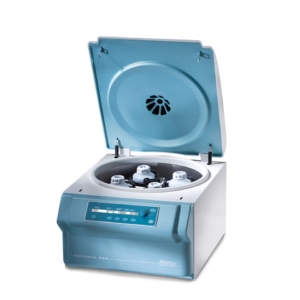
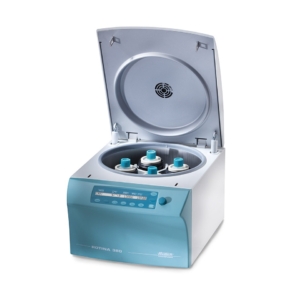
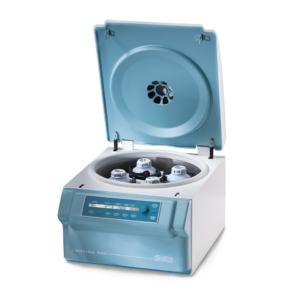
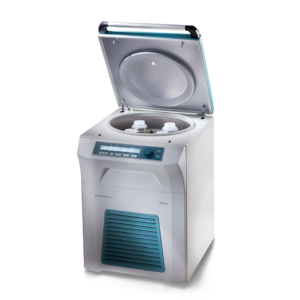
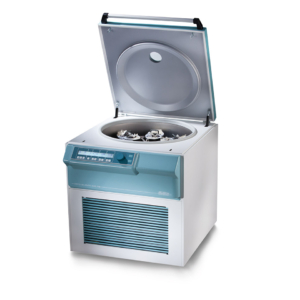
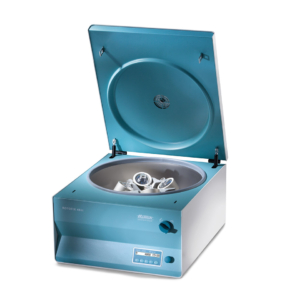
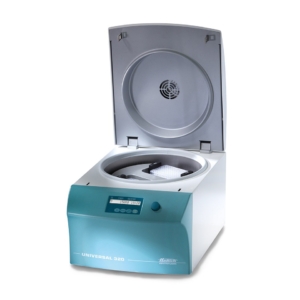
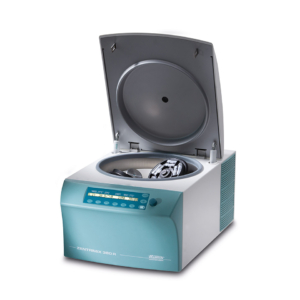
An industrial centrifuge spins samples or materials at high speed, creating centrifugal force that drives heavier components outward while lighter components remain closer to the center. This enables fast and controlled phase separation in technical and production-related applications.
Which industries use Hettich centrifuges beyond traditional laboratories?
Hettich centrifuges are used in sectors such as food production, environmental technology, pharmaceutical manufacturing, the chemical industry, waste management, and technical research. They are well suited for applications requiring reliable separation and repeatable performance.
Can Hettich centrifuges be used for process control in production?
Yes, centrifuges can play an important role in process control by analyzing samples taken directly from production lines. This provides fast insight into particle content, phase distribution, or fluid quality during ongoing production.
What types of materials can be processed in an industrial centrifuge?
Industrial centrifuges can be used to process particle-containing liquids, emulsions, sludge, biological materials, and various industrial mixtures. The appropriate rotor and accessories are selected based on volume, density, and the desired level of separation.
How do centrifuges support quality assurance in industrial settings?
By enabling precise separation and analysis of samples, centrifuges help companies monitor product quality, detect deviations, and maintain stable production processes. This is especially important in industries with strict requirements for documentation and traceability.
Are Hettich centrifuges designed for frequent and demanding use?
Hettich is known for robust construction and operational reliability. Many models are designed for frequent use in demanding environments where consistent performance, low noise levels, and long service life are important factors.
Which features are important in a centrifuge for industrial applications?
Key features include precise speed control, programmable run times, advanced safety systems, optional cooling functions, and the ability to document run parameters. These capabilities ensure both operational safety and process traceability.
What should be considered when selecting a centrifuge for technical or industrial use?
Important considerations include capacity, maximum speed (RPM/RCF), type of materials being processed, cooling requirements, and the need for documentation or integration into existing workflows.
How can a centrifuge improve efficiency in production environments?
By providing fast and reliable separation of process samples or materials, centrifuges reduce analysis time, support quicker decision-making, and contribute to more stable and efficient production processes.